Not all CO₂ is the same:What types of carbon dioxide emissions do cars produce?
 Susan Simonová
Today, CO₂ emissions are one of the key contributors to climate change and global warming. The automotive industry plays a significant role in this problem. When discussing emissions, it’s important to distinguish between different types and understand their impact in the overall process.
Types of CO₂ Emissions
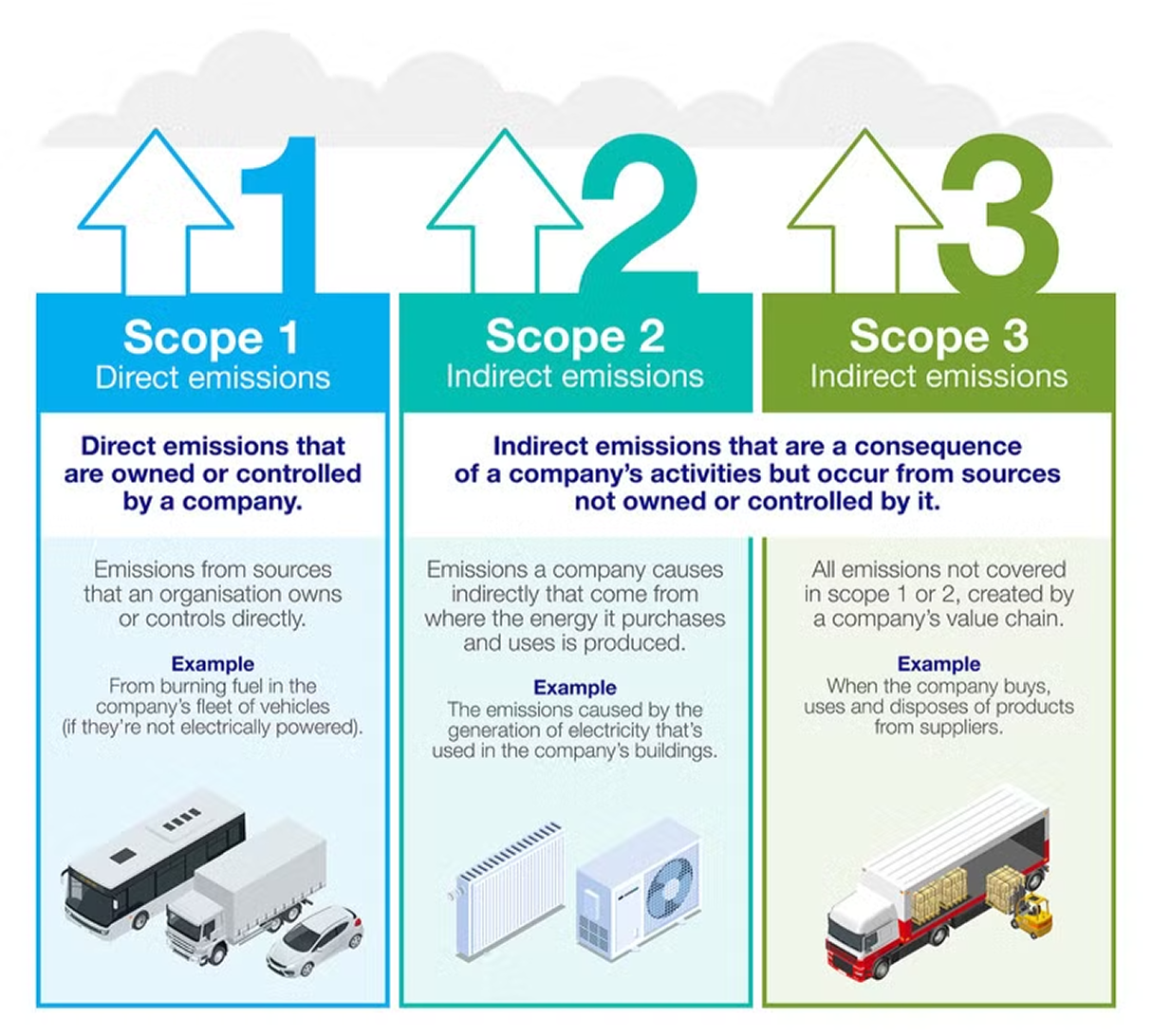
CO₂ emissions are divided into three main categories based on Scope 1, 2, and 3:
- Scope 1 emissions – These come directly from the combustion of fossil fuels like gasoline or diesel (for example, in cars). These are emissions produced right at the place where the fuel is consumed.
- Scope 2 emissions – These are indirect emissions from the production of energy that a company purchases and uses. This includes emissions from electricity generation used in buildings, for example.
- Scope 3 emissions – These include emissions that are not produced by the company itself and are not the result of activities from assets it owns or controls. They are a result of activities from assets it does not directly control—upstream and downstream in its value chain. An example is the purchase, use, and disposal of products from suppliers. Scope 3 includes all sources not covered by Scope 1 and 2.
CO₂ and Transport
As we now understand, the automotive industry is a major contributor to CO₂ emissions, especially Scope 1 and 3. The European Parliament reports that road transport in the EU accounts for approximately 21% of CO₂ emissions. While stricter emissions standards are being introduced, fossil fuel-powered cars still make up a large share of CO₂ emissions.
- Passenger cars account for approximately 51.9% of all CO₂ emissions from transport in the EU.
- Heavy-duty vehicles (including buses) account for another 35.1%.
- Air transport contributes around 9.2%.
- Other transport makes up the remaining 3.3%..
A Look at the Czech Republic
Transport-related emissions in the Czech Republic reached a total of 19.27 million tons of CO₂ in 2021 (16.1% of total emissions). Passenger car traffic produces 11.18 million tons of CO₂ per year (9.4%), while freight and bus transport accounts for 7.35 million tons (6.2%).
Emissions from transport can be reduced by switching to alternative fuels (e.g., biomethane, CNG, hydrogen, or electricity), increasing the share of public transport, and reducing the number of vehicles on the roads. Traffic volume can also be reduced by increasing vehicle occupancy (e.g., through carpooling) or reducing the need for transport (e.g., remote work).
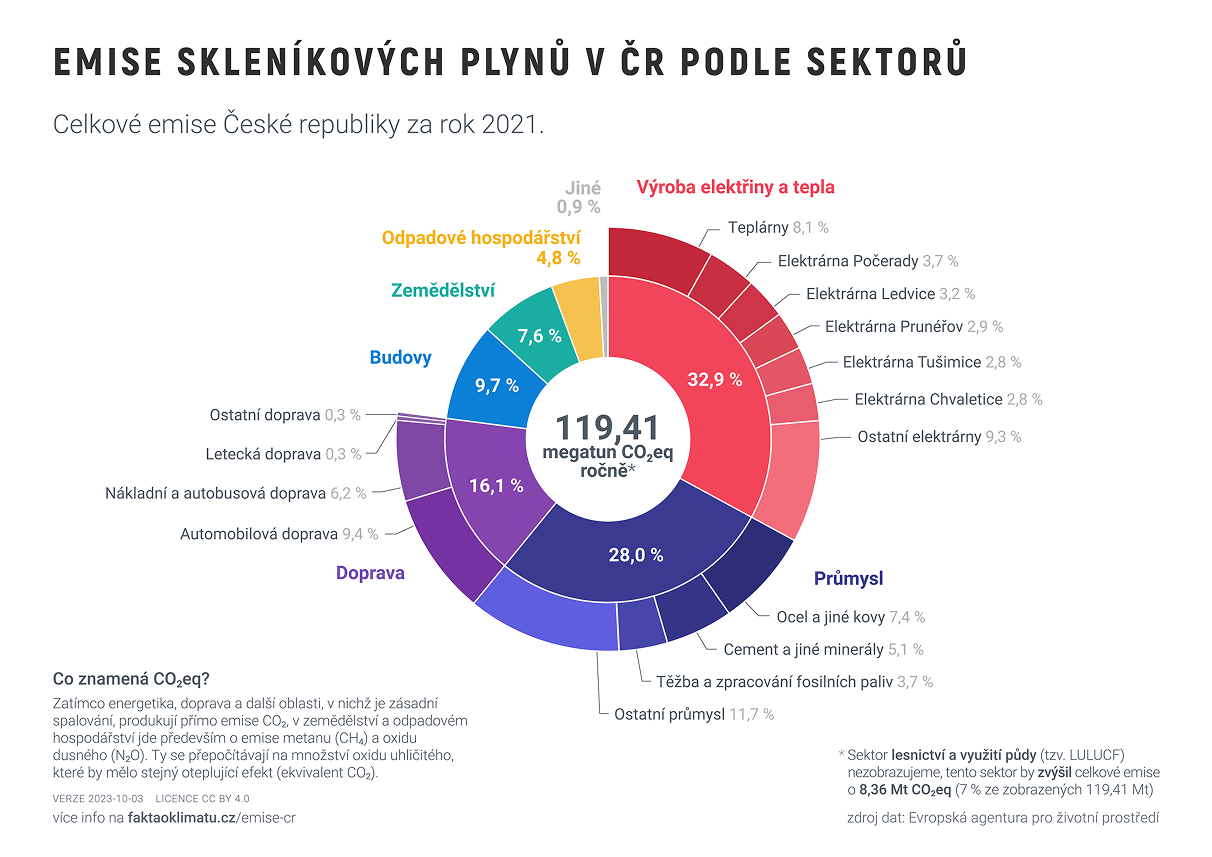
Breakdown of total greenhouse gas emissions (in tonnes of CO₂ equivalent) in the Czech Republic by sector of human activity for the year 2021. The annual volume of emissions in the Czech Republic is 119.41 million tonnes (data from 2021). Per capita, this amounts to 11.38 tonnes of CO₂eq per person.
Reducing Transport Emissions
One of the main solutions is the shift toward electric vehicles, which eliminate Scope 1 emissions as they don’t use fossil fuels. However, the production and disposal of electric cars are more environmentally demanding than conventional cars, and their operational emissions depend on how the electricity is produced. Still, considering Europe’s energy mix, electric vehicles have proven to be a cleaner alternative to gasoline-powered cars.
Statistics show that in 2018, the average car in Europe carried only 1.6 passengers. Carpooling or shifting to public transport, cycling, or walking could significantly reduce emissions. Companies like Yedem are working on innovative solutions to optimize corporate mobility and reduce the number of cars on the road through smart parking management and carpooling. Besides cutting Scope 1 and Scope 3 emissions, carpooling also brings added benefits—such as improving employee commuting options, strengthening company culture, and reducing parking costs. At the Dukovany power plant, carpooling saves 200 parking spaces every day.
This article is based on various sources, including data from the National Grid, the European Parliament, UNEP, and Fakta o klimatu.
Be One Step Ahead
Subscribe to our newsletter for tips on handling company mobility and parking.


We Help Companies


Get Company Parking & Commuting Under Control
With our smart system for fair parking & commuting management. A triple win — for the company, your colleagues, and the planet.